
Executive Perspective: Driving Cell Therapy Innovation in Washington State
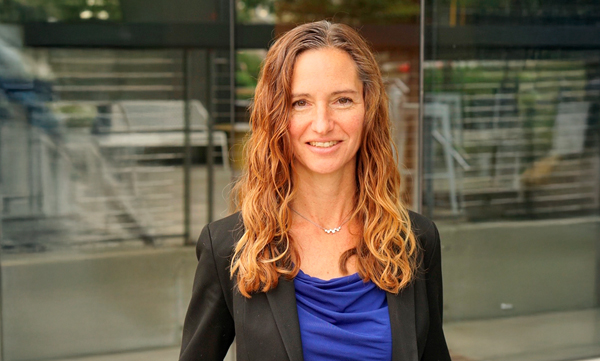

Allison Bianchi is Vice President, Cell Therapy Development at Bristol Myers Squibb (BMS) and serves as Site Head for the organization’s Seattle site. She shares insights into her career, the evolution of cell therapy, and the strengths of Washington’s life sciences community.
Q: Can you walk us through your journey at BMS?
Bianchi: My journey actually started in 2014 when I led the molecular assays team at Juno Therapeutics, which was later acquired by Celgene. I eventually joined BMS when it acquired Celgene in 2019. I was in biologics process development up to that point, so transitioning into the analytical department of a cell therapy company was a big career jump. At that time, cell therapy was a new territory for everyone. It was fantastic because it was a smaller environment, and it was my first opportunity to build my own team, which was great management experience.
About 18 months after joining, Juno formed a new division focused on advancing technologies for cell therapy process development and analytics. I was able to build a cross-functional team that quickly grew to 75 people, ranging from cryobiologists to non-viral delivery specialists. We were responsible for developing a new CAR-T manufacturing process and analytics called NEX-T, which BMS still employs today.
During that time, I also helped design parts of our Dexter facility in South Lake Union that currently serves as BMS’ Seattle site. I briefly stepped away in 2021 to gain experience in tumor-infiltrating lymphocytes at a smaller biotech before returning to BMS in my current role.
Q: What trends are shaping the future of cell therapy, and what developments excite you most?
Bianchi: Cell therapy has always had great promise, but the challenge is making it faster, more affordable, and globally available. We constantly review our processes and are heavily investing in automation platforms to improve efficiency and scale.
What excites me most is seeing the use of these therapies expand beyond oncology. A cancer program I supported years ago is now being used for autoimmune diseases, showcasing the potential of cell therapy to improve outcomes across many conditions. We’re also exploring next-generation approaches. Our allogeneic programs—which use reprogrammed T-cells from healthy donors rather than relying on a patient’s own cells—are gaining momentum, showing how the field is advancing beyond its previously primary autologous focus.
Q: What are some of the advantages of working within a large organization like BMS?
Bianchi: The extensive network is a major advantage. In larger organizations, you see great synergies and a convergence of expertise between different teams that can accelerate progress. As a result, there’s a lot of sharing taking place around the biology of our products and in viral vector manufacturing, gene delivery methods, and automation. You can also collaborate with third parties who complement internal expertise.
BMS offers strong opportunities for career growth. In my experience, career movement can be limited at smaller companies. At BMS, you can explore roles within or outside your immediate team without needing to leave the organization. This internal mobility helps people grow while contributing in new ways.
Q: What motivates you in this field?
Bianchi: I consider it such a privilege to work on something that can improve someone’s health and quality of life. There’s a constant reminder that people are waiting for this therapy that could transform their lives, so you’d be hard-pressed to find a group of people more passionate about their work.
I recall staying up late to write an exception for a manufacturing run to get material approved by the FDA—someone somewhere was waiting for that therapy. Even when the work is hard, there is no doubt it matters.
Q: What’s unique about BMS’s presence in Washington’s life sciences community?
Bianchi: Our Seattle site is structured as an interdisciplinary hub where research and development are housed together. This setup strengthens collaboration across research, development, clinical, and translational teams.
We’re also near our manufacturing facility in Bothell, which enables strong feedback loops and quick problem-solving. I enjoy visiting the facility and hearing directly from the teams there, which helps us improve our work and stay connected.
Q: What’s kept you in Washington and what do you love most about it?
Bianchi: I first came to Washington for graduate school, and one of my earliest memories is taking the ferry to Bainbridge Island and seeing the sunset over downtown Seattle. It was breathtaking.
If you love the outdoors, there’s no better place; the natural beauty and quality of life here are incredible. Staying for 30 years wasn’t by accident—I truly fell in love with the area.
Interested in joining Allison Bianchi in advancing cell therapy innovation at Bristol Myers Squibb? Visit Bristol Myers Squibb’s careers page to learn more about current openings.
Sponsored by Life Science Washington and Bristol Myers Squibb